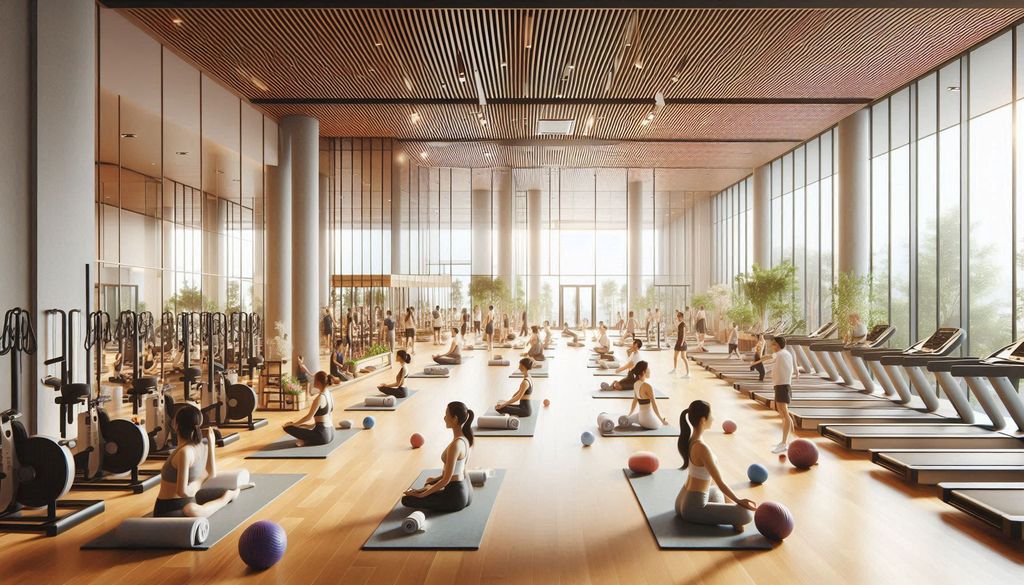
In a major boost for modern housing projects and gated communities, the Maharashtra Urban Development Department has allowed cooperative housing societies and apartment complexes to develop larger yogalayas, fitness centres, recreation centres, meditation halls and swimming pool facilities without consuming additional Floor Space Index (FSI).
The government has increased the permissible area for such leisure and wellness facilities from 2% to 4% of the total built-up area of the project under the Development Control and Promotion Regulations (DCPR) 2034 applicable in Mumbai.
What Has Changed Under the New Notification?
The
Maharashtra Urban Development Department
has issued amendments to:
- Regulation 31(1)
- Regulation 37(28)
- Regulation 37(28A)
under:
DCPR 2034
Earlier Rule
- Only 2% of total built-up area could be used free of FSI for:
- Clubhouse
- Recreation and wellness amenities
New Rule
- Up to 4% of total built-up area can now be utilised free of FSI for:
- Yogalaya
- Fitness centre
- Meditation centre
- Recreation centre
- Covered swimming pool
Minimum Area Requirement
The notification provides that:
- Minimum size of:
- Yogalaya or fitness centre
should be: - 323 sq ft
- Yogalaya or fitness centre
Covered Swimming Pool Also Allowed
An important addition is that:
- A covered swimming pool can now form part of the:
- Fitness centre component
However:
- If the total leisure area exceeds 4%
- Excess area will be counted as:
- FSI consumption
- Excess area will be counted as:
Why This Amendment Is Important
Modern residential townships and gated communities increasingly demand:
- In-house wellness facilities
- Fitness spaces
- Yoga centres
- Meditation rooms
- Recreation amenities
Due to:
- Traffic congestion
- Urban lifestyle changes
- Work-from-home culture
Residents prefer having such facilities inside the society premises itself.
Ownership of These Facilities
The notification clearly states that ownership of:
- Yogalaya
- Fitness centre
- Recreation amenities
will remain only with:
- The cooperative housing society, or
- Apartment owners’ association
This prevents misuse or separate commercial exploitation of these spaces.
Where Can These Amenities Be Constructed?
The facilities may be developed:
- Inside the building
- On podium levels
- In basement areas
- Along with existing or proposed clubhouse facilities
All such amenities together will form part of the:
- 4% FSI-free component
Applicability to Commercial Buildings
The new provisions are also applicable to:
- Office buildings
- Commercial complexes
However:
- A 100% premium based on Ready Reckoner Rate (RRR) will be charged.
Impact on Real Estate Projects
This amendment is expected to:
Benefit Homebuyers
- Better lifestyle amenities
- Wellness infrastructure within premises
- Improved property value
Benefit Developers
- Ability to market enhanced facilities
- Better compliance transparency under RERA
- Additional non-FSI utility spaces
Benefit Societies
- Larger recreational and health facilities
- Better utilisation of common spaces
- Enhanced community living experience
RERA Transparency Requirement
As highlighted by industry experts, such amenities are now required to be:
- Reflected in:
- Approved plans
- Flat sale agreements
under:
MahaRERA
This ensures:
- Transparency
- Prevention of misuse
- Clear disclosure to buyers
Growing Demand for Lifestyle Amenities
Housing societies today increasingly seek:
- Yoga halls
- Gymnasiums
- Meditation rooms
- Indoor recreation zones
- Swimming pools
especially in large gated communities comprising:
- 50 to 100 flats or more.
The amendment recognises the changing lifestyle needs of urban residents.
Conclusion
The Maharashtra government’s decision to increase FSI-free recreational and wellness spaces from 2% to 4% is a major step toward improving urban residential living. Housing societies and developers can now provide larger yoga centres, fitness areas and recreation facilities without additional FSI burden, making modern residential projects more community-focused and wellness-oriented.