

Buying a new home is generally expected to bring peace of mind, but for Akash, a homeowner from Mubarak Nagar, Nizamabad, the experience turned into a prolonged dispute after water began leaking through the terrace of his apartment.
Akash had performed his housewarming ceremony on August 26, 2023. Less than a year later, in July 2024, the apartment developed water leakage from the terrace, along with other alleged defects including cracks, incomplete painting and civil works.
The matter eventually reached the Telangana Real Estate Regulatory Authority (Telangana RERA). In its order dated August 24, 2026, the Authority granted relief to Akash specifically on the terrace water leakage issue and directed the builder to inspect the terrace and carry out the necessary rectification within 60 days.
The Authority, however, did not grant relief on all the other allegations because the homeowner could not substantiate those claims with sufficient technical or documentary evidence.
Housewarming Took Place Before Completion of Work
Akash’s housewarming ceremony was conducted on August 26, 2023, even though certain work in the apartment remained incomplete.
According to Akash, the builder’s supervisor, Shiva, informed him that the remaining painting work would be completed after a “No Due” certificate was obtained.
Relying on this assurance, Akash proceeded with the housewarming ceremony.
He subsequently paid the outstanding amount of approximately ₹22.07 lakh on September 6 and 7, 2023.
The builder later handed over possession of the apartment on August 13, 2024, after Akash signed a document. However, according to him, he was not provided with a formal possession letter.
Builder Said the Apartment Was Sold as Semi-Finished
The builder disputed Akash’s allegations concerning the condition of the apartment.
It relied upon Clause 22 of the Sale Deed, which stated that certain finishes and civil works, including plastering, flooring, joinery and colour rendering, were required.
The builder maintained that the apartment had been sold as a semi-finished unit and that Akash was aware of this condition when he took possession.
Akash did not dispute that the Sale Deed referred to a semi-finished apartment. However, he argued that the transaction consisted of two separate arrangements:
- Sale Agreement/Sale Deed for the apartment; and
- A separate Work Contract for completing the remaining works.
According to Akash, the Work Contract required the builder to complete works such as plastering, flooring, POP work, sanitary fixtures, windows, doors and painting.
He argued that describing the apartment as semi-finished could not justify handing over a property with unresolved basic construction and finishing issues.
Terrace Leakage Became a Major Problem
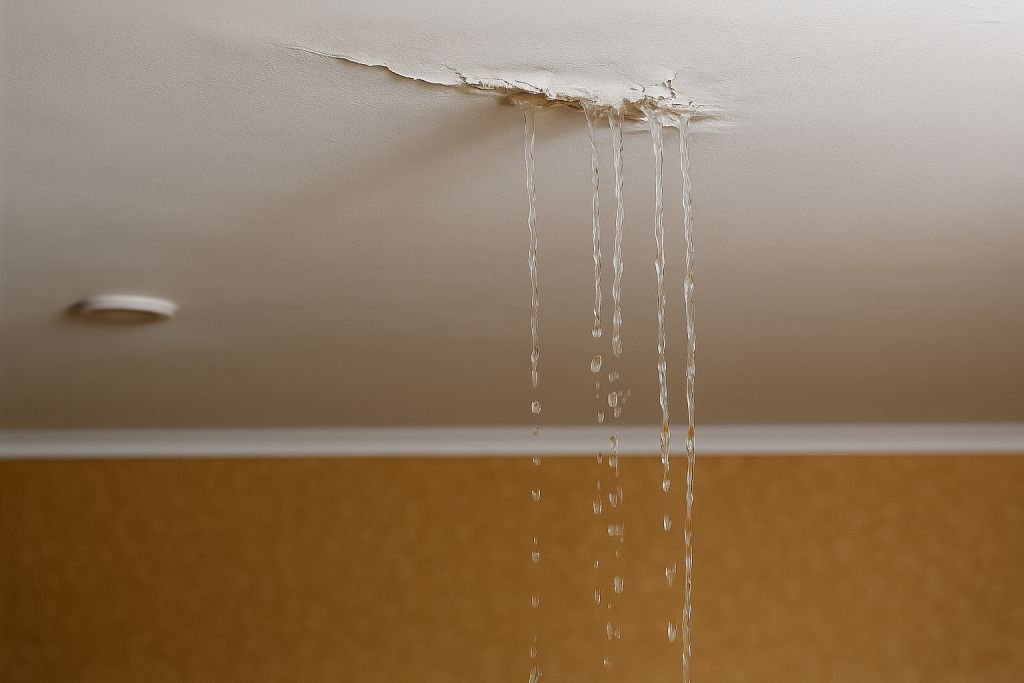
The dispute escalated after Akash noticed water leakage from the terrace.
According to the material placed before Telangana RERA, the builder acknowledged the leakage and assured Akash that the required civil works and waterproof coating would be completed within a month.
However, Akash alleged that the work remained incomplete even after approximately six months.
The problem became more serious during heavy rainfall in Nizamabad. Water leakage allegedly caused significant damage, including the collapse of the POP ceiling.
Akash also claimed that there were approximately 14 cracks in the apartment and that one particular crack had been repaired several times without resolving the problem.
The builder disputed the allegations and maintained that there were no multiple cracks or significant structural defects.
Telangana RERA Granted Relief Only on Water Leakage
Akash approached Telangana RERA seeking relief against the builder.
The Authority ultimately granted relief specifically in relation to the terrace water leakage.
However, the other allegations relating to incomplete works and various defects could not be established before the Authority.
This distinction is important because merely alleging defects is not always sufficient. A homebuyer may need to produce photographs, technical reports, expert opinions, certifications or other documentary evidence to establish the existence and nature of the alleged defect.
Section 14(3) Provides Five-Year Protection
The key provision considered by Telangana RERA was Section 14(3) of the Real Estate (Regulation and Development) Act, 2016.
The provision provides a statutory safeguard to an allottee after possession against specified defects that come to light within five years from the date of handing over possession.
These include defects relating to:
- Structural elements
- Workmanship
- Quality
- Provision of services
- Other obligations of the promoter under the Agreement for Sale
Where such a defect is brought to the promoter’s notice within the prescribed period, the promoter is required to rectify the defect without further charge within the statutory period.
If the promoter fails to rectify the defect, the allottee may seek appropriate compensation under the Act.
Water Leakage Can Fall Within Defect Liability
The case also highlights the distinction between a structural defect and a workmanship defect.
The material provided in the case notes that the RERA Act does not specifically define these two expressions, leaving their precise interpretation to judicial and regulatory decisions.
A structural defect generally concerns the integrity of the building itself, such as problems involving foundations, load-bearing elements, beams or slabs.
A workmanship defect, on the other hand, can concern the manner in which construction work has been executed.
Examples may include:
Poor waterproofing, defective tiling, inadequate grouting and faulty plumbing.
Such defects may not necessarily threaten the structural integrity of the building but can nevertheless indicate inadequate execution of construction or finishing work.
In Akash’s case, the Authority treated the terrace water leakage as an issue falling within the scope of the statutory defect-liability protection.
Builder Directed to Inspect and Rectify Terrace
Telangana RERA observed that although the builder had described the water leakage issue as minor, the Authority considered it necessary to ensure construction quality and compliance with the promoter’s statutory obligations.
It therefore directed the builder to:
Conduct a thorough inspection of the terrace area; and
Carry out the necessary rectification work, wherever required, within 60 days from the date of the order.
Akash was also directed to cooperate with the builder and provide full access to the apartment and terrace so that the inspection and remedial work could be undertaken.
The Authority further stated that failure to comply with the order could result in the imposition of a separate penalty.
Why Other Defects Were Not Allowed
Although Akash raised several allegations concerning incomplete work, cracks and other deficiencies, Telangana RERA noted that he had not produced sufficient technical evidence to substantiate those claims.
The Authority observed that there were no adequate technical reports, photographs, certifications or other supporting material establishing the alleged incomplete works or deficiencies.
The project had also obtained an Occupancy Certificate (OC).
According to the Authority, the existence of an OC prima facie indicated that the essential services required for occupation had been completed.
This did not prevent the Authority from examining a specific defect such as water leakage, but it affected the other allegations that were not adequately proved.
Homeowners’ Association Was Also Not Made a Party
Another factor noted in the proceedings was that Akash had not made the homeowners’ association a party to the complaint.
This illustrates why the manner in which a RERA complaint is framed can be important, particularly where the allegations concern common areas or facilities rather than defects confined to an individual apartment.
A homebuyer should therefore carefully identify whether the alleged defect relates exclusively to the individual unit, a common area or the entire project.
Builder Was Initially Not Named Separately
There was also a procedural issue concerning the parties to the complaint.
Instead of naming the builder separately, Akash had impleaded Pranay Attal, Atish Attal and Gangone Snehith, who were partners of the builder.
Telangana RERA treated this as a bona fide mistake and held that the individuals could be considered to represent the builder.
Consequently, the directions and liabilities arising from the order were treated as binding upon the builder and its partners.
Defect Liability Is Different From Compensation for Delay
The case also demonstrates an important distinction between rectification of defects and monetary compensation under RERA.
The Telangana RERA Authority dealt with the terrace leakage as a defect requiring rectification.
However, with respect to the issue of compensation for delay in possession, the Authority directed the homeowner to approach the Adjudicating Officer under Section 71 of RERA, by filing the prescribed Form ‘N’ under Rule 34 of the Telangana RERA Rules, 2017.
Thus, a claim for rectification of a defect and a claim seeking monetary compensation may involve different statutory mechanisms and forums within the RERA framework.
What Homebuyers Can Learn From the Case
The Telangana RERA order highlights the importance of acting promptly when a construction defect becomes apparent.
Homebuyers should:
Report defects in writing: Inform the builder through email, registered communication or another traceable method.
Keep photographs and videos: Visual evidence can help establish the condition of the property.
Obtain technical reports: For structural cracks, seepage, waterproofing or other technical issues, an expert report can be valuable.
Preserve the Agreement for Sale and Work Contract: These documents may establish exactly what the builder was required to provide.
Check the possession date: Keep documentary evidence showing when possession was actually handed over.
Understand the five-year defect liability period: Section 14(3) provides an important statutory protection for specified defects that arise within five years from possession.
Distinguish defects from compensation claims: A direction to rectify a defect and a claim for monetary compensation may fall under different provisions and procedures.
Key Takeaway
The Telangana RERA ruling shows that a builder’s responsibility does not necessarily end when possession is handed over.
Where a qualifying structural or workmanship defect comes to light within the statutory five-year period, Section 14(3) provides a mechanism requiring the promoter to address the defect without additional cost to the allottee.
In Akash’s case, Telangana RERA found sufficient basis to direct the builder to inspect and rectify the terrace water leakage within 60 days.
At the same time, the case demonstrates that homebuyers must support broader allegations of incomplete construction or defects with adequate technical and documentary evidence. The relief ultimately available under RERA can depend not only on the existence of a grievance but also on the evidence produced and the specific statutory provision under which the relief is sought.